
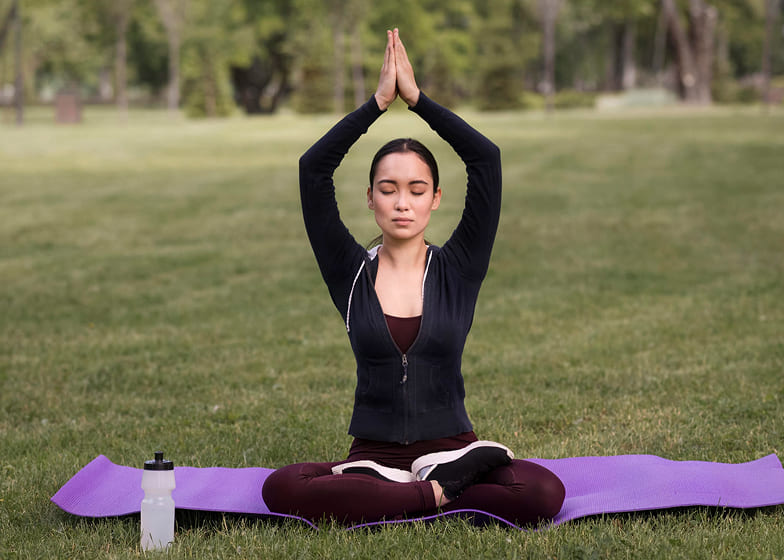
Yoga is not just exercise — it is a mind-body-spirit practice that has been followed in India for thousands of years. It helps you stay flexible, improves balance, strengthens muscles, and also calms the mind.
You don’t need to be an expert to start. Even if you’re a complete beginner, a few simple poses can make a big difference in how your body feels and moves.
Benefits of Yoga for Flexibility and Balance
- Improves posture – reducing back and neck pain.
- Enhances mobility – making everyday movements easier.
- Strengthens muscles – preventing injuries.
- Increases focus – as balance requires concentration.
- Relieves stress – through controlled breathing.
Preparing for Your Yoga Practice
- Wear comfortable clothes.
- Choose a quiet space.
- Use a yoga mat or a clean surface.
- Practice on an empty stomach or after at least 2 hours of eating.
Beginner-Friendly Yoga Poses for Flexibility and Balance
1. Tadasana (Mountain Pose)
Purpose: Improves posture and balance.
- Stand tall with feet together.
- Distribute weight evenly on both feet.
- Stretch arms upward and breathe deeply.
Beginner tip: Focus your eyes on one point to maintain balance.
2. Vrikshasana (Tree Pose)
Purpose: Enhances balance and strengthens legs.
- Stand straight.
- Place your right foot on the inside of your left thigh.
- Join palms in front of your chest or raise them overhead.
- Hold for 20–30 seconds, then switch legs.
3. Bhujangasana (Cobra Pose)
Purpose: Improves flexibility in the spine.
- Lie on your stomach.
- Place palms under shoulders.
- Inhale and slowly lift your chest, keeping elbows slightly bent.
- Hold for a few breaths.
Beginner tip: Don’t over-arch — keep your shoulders relaxed.
4. Trikonasana (Triangle Pose)
Purpose: Stretches legs, hips, and spine.
- Stand with feet wide apart.
- Turn your right foot outward.
- Extend arms to shoulder height.
- Bend sideways and touch your right ankle while the other arm points up.
Connection to ancient wisdom: The triangle represents balance between body, mind, and soul.
5. Setu Bandhasana (Bridge Pose)
Purpose: Strengthens back and improves hip flexibility.
- Lie on your back, knees bent, feet flat.
- Lift hips upward, keeping shoulders grounded.
- Hold for 20 seconds.
6. Adho Mukha Svanasana (Downward Dog)
Purpose: Full-body stretch improving flexibility in hamstrings, shoulders, and spine.
- Start on hands and knees.
- Lift hips up and straighten legs, forming an inverted "V" shape.
- Keep heels down if possible.
7. Paschimottanasana (Seated Forward Bend)
Purpose: Increases flexibility in the back and hamstrings.
- Sit with legs straight.
- Inhale, raise arms up.
- Exhale, bend forward and try to touch your toes.
Common Mistakes Beginners Should Avoid
- Pushing too hard (can cause injury)
- Holding breath instead of breathing naturally
- Comparing yourself to others
- Skipping warm-up
How Often Should You Practice?
Start with 15–20 minutes daily or 3–4 times a week. Slowly increase time and difficulty as your body adapts.
How Yoga Balances Your Inner and Outer World
Just like the sages in the Vedas balanced their duties with meditation, yoga helps us balance our modern busy lives.
A flexible body supports a flexible mind — ready to adapt to challenges without breaking under pressure.
Every time you practice, remember the wisdom of our ancestors: strength and flexibility together create harmony — in the body and in life.
